
Choosing Your Cabinet Door Style
A cabinet’s door is a hallmark of its design, quality, and construction. Being the first part of a cabinet that you can see, cabinet doors also influence the feel of your space, the functionality of your cabinets, and their longevity. When choosing cabinets, it is important to consider how door construction, style, and finish factor into the look of your space. This article will break down each component of a cabinet door to help you decide what style is best for you. First is the primary component of a door: its construction.
Door construction
The anatomy of a cabinet door is relatively straightforward, but there are a few useful technical terms to know.
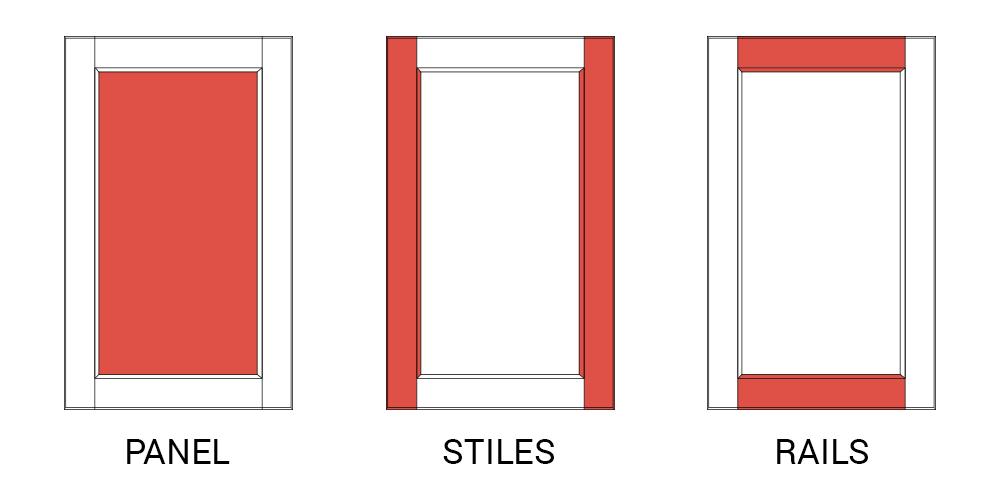
- Panel: the central piece of a door, typically either raised, recessed, or fit for glass.
- Stiles: the vertical components of a door, found left and right of the center panel. As with rails, stiles are either 2-3 inches thick with shaker, raised panel and recessed panel doors and 3/4-1 inch thick with slim shaker doors.
- Rails: the horizontal components of a door, found at the top and bottom. On shaker, raised panel and recessed panel cabinets, these rails are typically 2-3 inches thick. On slim shaker cabinets this rail size drops down to 3/4-1 inch thick.
- Hardware: while optional, cabinet hardware is recommended to preserve the finish of your cabinet doors. These are any knobs, pulls, or other mechanisms that open and close cabinet doors.
All doors, with the exception of slab doors, have a panel, stiles, and rails. The primary difference is whether the panel is raised or recessed.
Door Style Categories
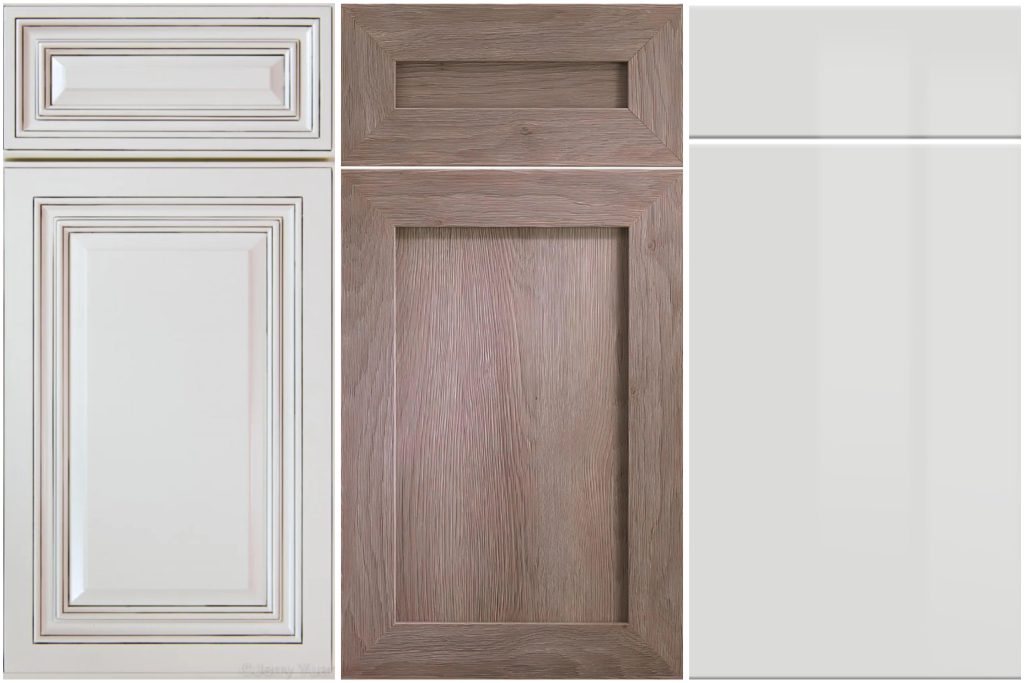
This section breaks down the three design categories cabinet doors can fall into: traditional, transitional, and modern or contemporary. For a more in-depth look at shaker-style doors, check out our buying guide.
Traditional style doors are intricate and decorative, often featuring raised panels, trims, or beadboard. The panels of these doors can be rounded or arched, adding another decorative element, albeit old-fashioned.
Traditional doors are usually constructed out of wood species with stronger color and grain characteristics, such as walnut, red oak, cherry, or hickory. These cabinets often function better in a design space where they are the focal point, stained to highlight the natural qualities of the wood they’re constructed from, or painted and glazed to emphasize their decorative contours.
Transitional door styles are a great transition (hence the name) between traditional and modern doors that fit well in both traditional and contemporary designs. Shaker-style doors are the most popular transitional style door, and are considered the “safe” option with kitchen designs.
Transitional doors are constructed out of wood species with a more neutral color and grain, such as maple, white oak, alder, birch, or paint-grade wood. Given their transitional nature, these doors function well either painted or stained.
Glass-Front cabinets are a common addition to transitional cabinet doors that add contrast and texture to your design without using a two-toned approach. They work well in upper cabinet doors, brightening a space and creating the illusion of a more open area.
Modern (Contemporary) door styles are usually full thickness slab doors, meant to blend seamlessly into a space create a thoughtfully streamlined look. Slab doors work well in both framed and frameless applications. You may also find some styles of shaker and slim shaker doors in contemporary spaces, especially in frameless construction.
These doors can be constructed with real wood; however real wood slab doors are more prone to warping and will show much more variation than traditional or transitional doors. Instead, they are more often constructed with MDF and then given a painted finish, veneer, or thermofoil (vinyl) to keep in line with their minimalist appearance.
You may be wondering what the difference between modern and contemporary is. Simply put, modern refers to a period between the early 1900s and the 1960s focused on clean lines and functional design. Midcentury modern is a prime example of this era, and many kitchens from this time featured slab doors. Contemporary refers to the current era of design, which is dynamic and always evolving. A popular contemporary design trend is frameless cabinetry or inset doors, creating a fully custom, built-in look.
Framed or Frameless?
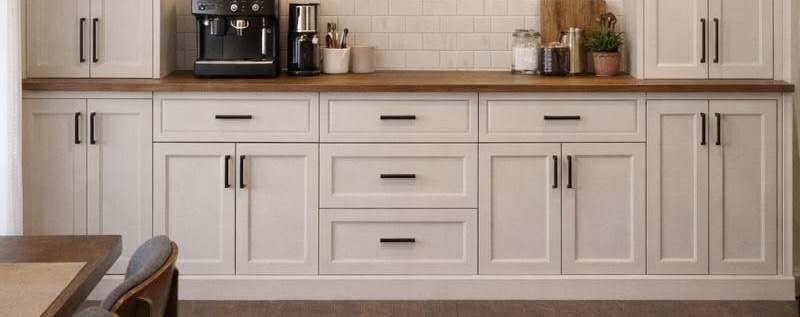
Framed cabinetry is characteristic of American-style cabinet construction. These will include a 1 1/2-to-2-inch frame over the cabinet box where the cabinet doors are attached. American-style doors are either partial or half overlay, revealing some of the face frame, or full overlay, which fully covers the face frame. Partial overlay is more commonly found in older cabinetry; it reduces the need for cabinet fillers because the exposed frame gives the doors some room to operate. Contemporary trends, however, lean towards full overlay applications to emulate a frameless appearance. Full overlay doors are a great option if you aim to highlight the features of your cabinet doors and hardware. Partial overlay uses less material and is by effect more budget friendly.
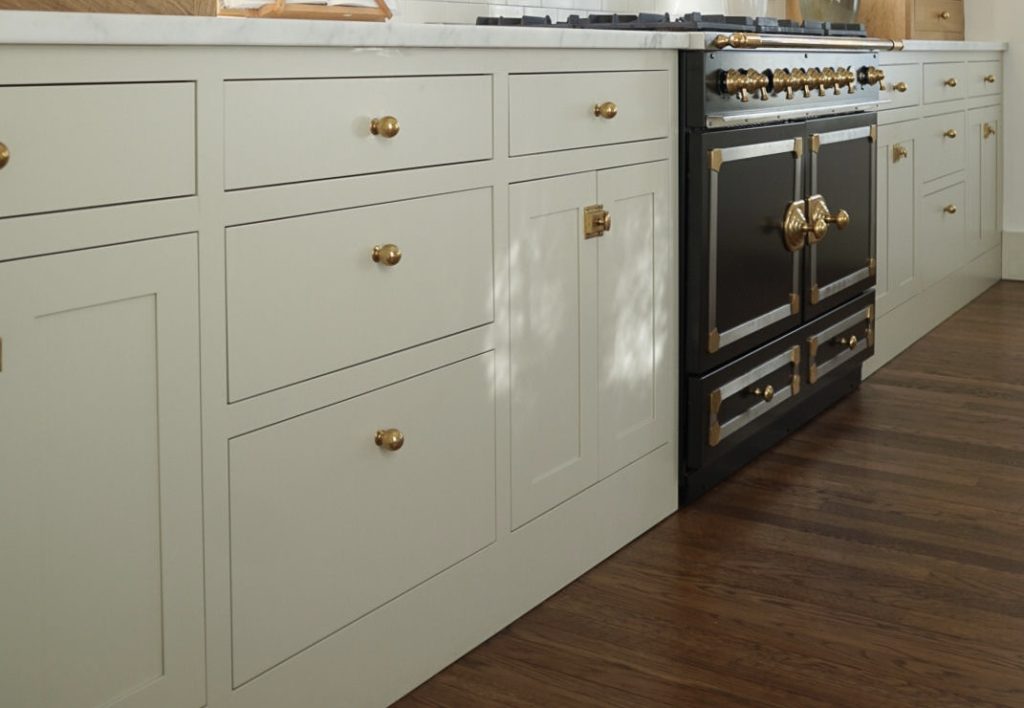
Frameless cabinets, or European-style cabinets, do not have a face frame. Instead, doors are hinged directly to the cabinet box (this is referred to as an inset door). Without a frame, they allow for greater use of space both inside the cabinet and in a cabinet layout. Euro-style cabinets are often intended for greater functionality, featuring storage and customization options not found in framed cabinets. These cabinets also do not require fillers to put spacing between cabinets and other design elements such as walls or appliances; this means you can utilize as much of your cabinet space as possible. Frameless construction or inset doors is a great option for a custom, built-in look.
Other Considerations
How you select your door style, color, and construction is entirely up to you. The joy of cabinetry is how customizable and personalized it can be! However, there are some basic things to keep in mind when choosing your door.
Cost: Certain woods will cost more than others. Cherry, walnut, mahogany, and quartersawn oak varieties tend to be more expensive, but are solid hardwoods that stand up to use well. Maple, red oak, alder, pine, and birch along with painted MDF are inexpensive options for quality cabinets, but may be more prone to dents, scratches, and other signs of use.
Operability: You want to ensure that your cabinets are fully operational and can serve their intended function. In tighter spaces, be sure to keep in mind door swing, hardware, and whether your cabinets need fillers or hinge restrictors to avoid damage.
Upkeep: First, it’s good to know that more detailed door styles will attract more dust and grime, plus they will require more effort to clean. Next, it’s important to use cleaners that are mild enough for cabinet doors that they won’t strip the finish. There are dedicated wood cleaners, but a simple and cost-effective option is diluted degreaser or soapy water.
Resale Value: This only matters if you plan to sell your home. However, shaker-style doors, due in part to their versatility, are good choices to increase a home’s resale value. No matter what trends come and go, shaker doors have remained a mainstay in kitchen cabinetry. They are readily available, easy to style, and affordable. White, gray, blue, or neutral wood tones are popular choices for homes going on the market.
Don’t let resale value alone be your driving factor in choosing a door style! Trends suggest that consumers are becoming more and more diverse in what they prefer. Let your kitchen be a room you can be proud of!
Final Thoughts
Cabinet door styles, materials, and finishes can influence your kitchen, bathroom, or living space in many different ways. The kitchen is the heart of the home, and understanding the basic components of a cabinet door like its construction and design style can help narrow down your options when selecting one that works for you and your space. Factors like color and material type can serve to further flesh out your personal style and taste.
In essence, remodeling your kitchen is a once-in-a-lifetime event. If you have the tools needed to select a style that suits your needs, you will love your kitchen for decades to come.
Related Posts
A Guide to Buying Kitchen Cabinets
-
Posted by
Madelyn Gatteri