
A Guide to Buying Kitchen Cabinets
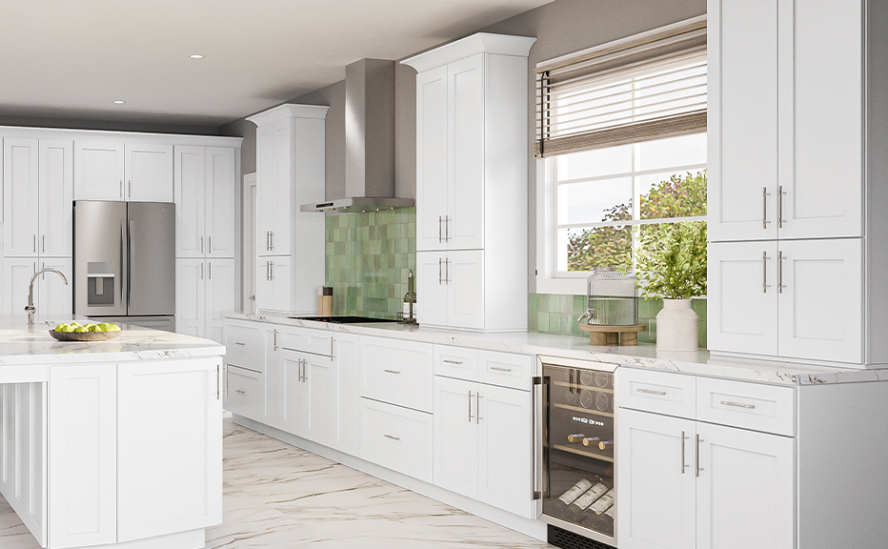
So, it’s time: your kitchen or bathroom looks old and outdated, it’s disorganized, and feels…tired. Or maybe your cabinets are quite literally falling apart. You want a kitchen that works for your lifestyle. Cabinets that refresh and refine your living space. Maybe something trendy and modern, or with a bit more of a classy feel. But, where do you start? That’s where our guide to buying kitchen cabinets steps in. Read on, and we’ll help answer some of the toughest questions standing between you and your dream space.
Step 1: Determine Cost
Like buying a car or a home, the first step in remodeling your kitchen should be setting a budget. It can be incredibly difficult to estimate a total cost of a run of cabinets without factoring in scope of work, style, and material, but a general rule of thumb is to aim for roughly 5-15% of your home’s total value for a full remodel. Rest assured, it is absolutely possible to remodel on a tighter budget—especially with Kitchenology! We specialize in affordable pre-assembled and RTA semi-custom cabinetry. However, even for the most affordable kitchens, aim to spend roughly $2,000-$5,000 on your cabinets.
Step 2: Find Your Layout
Next, it’s time to measure your space. If you are keeping the old blueprint (a design term for the layout), and want a refresh, all you need to do is measure the old kitchen cabinets. Measure your bases from wall to wall, factoring in any fillers. For your wall cabinets, measure from wall to wall but also measure their height. Standard heights range between 30, 36, and 42 inches.
If you are doing a complete tear-out and re-design, it is important to measure a little more thoroughly. Measure all of your walls, your windows and doors, your appliances, and your ceiling height. For homes with soffits, be sure to notate the soffit height. It can be helpful to map out your new layout with tape or chalk to ensure it works in your space.
Step 3: Pick Your Style & Finish
You have your budget in mind, you’ve found your ideal layout, now it’s time to think about style. Stock and semi-custom cabinets can be broken down into three categories:
- Shaker cabinets are a highly popular option that feature a five-piece construction with a recessed center panel and outside frame. Their utilitarian-yet-fashionable and versatile design makes them perfect for a range of spaces.
- Slim Shaker, Micro Shaker, or Thin Shaker cabinets feature the same recessed panel and outside frame, however the stiles are often much thinner, exposing more of the inner panel. These trendy and sleek cabinets help elevate any space.
- Super Shaker cabinets are a little bit more confusing, but these are typically any shaker-style cabinet with an extra decorative touch. Some come with a 45-degree bevel to help soften the angular lines of shaker cabinets. Others include an extra piece of framing around the panel, craftsman-style. Double Shaker cabinets can also fit into the category of Super Shaker. These cabinets add a unique decorative element to traditional shaker doors and help your space stand out.
Next, the finish you opt for can also influence your space. Generally, cabinet finishes are broken down into two categories: painted and stained. These categories can be broken down even further into color and tone families:
- Light-toned cabinets will be any finish that emphasize or bring light into a space. White is a classic neutral, but colors including light-colored wood such as white oak, light gray, light green, off-white, or cream are other great choices to brighten up a space.
- Mid-toned cabinets are perfect for highlighting a certain feature of your kitchen, such as your countertops, backsplash, or flooring. Mid-toned cabinets are often found in shades of gray, blue, sage green, or greige.
- Dark cabinets make a bold, dramatic statement. They bring character and mystery to your space. Considering colors like espresso, charcoal, saddle, dark gray, black, navy blue, or forest green can give you a room with a bold focus on your cabinetry.
Consider Finding a Designer
If you still need ideas, it can help to check out Pinterest for a comprehensive review of all the most popular kitchen design trends. Even better, meet with a kitchen designer to go over your wants and needs. They will help you design a space that works for you functionally and aesthetically, without all the guesswork. They will also have the specialized knowledge needed to determine proper clearances, angles, and cabinet options to make sure there are no hiccups or delays during the install process.
If you want to tackle your design yourself, here are some simple kitchen design principles to keep in mind:
- Ensure your kitchen flows efficiently. Place designated storage cabinets in easy-access areas, such as your silverware drawer next to your dishwasher, or your pots and pans cabinet near your stove. Avoid breaking up workspaces to maximize efficiency.
- Maintain 18-24 inches of clearance between your base cabinets (including your countertop) and your wall cabinets. You want to ensure you have easy access to your wall cabinets. Pulling out a stool to grab a cup or plate will get old fast!
- For over-the-range microwaves or range hoods, leave 21-24 inches of clearance at a minimum. For decorative hoods, aim for 24-36 inches.
- Don’t try to squeeze an island into a space that cannot fit one. The recommended minimum clearance around an island is 36 inches. Near appliances or with seating, that clearance goes up to 42 inches.
- Keep in mind how many people use your kitchen, and how to make it functional for everyone. It’s hard to make a home-cooked meal while you’re constantly knocking elbows with your loved ones.
Step 4: Place Your Order
Now, it’s time to order! A large part of the convenience of RTA and pre-assembled kitchen cabinets is the ability to order online and have them delivered right to your doorstep. However, there are some things to keep in mind as you prepare to place your order. Most importantly, make sure to cross-reference your design or cabinet list before placing an order. Next, make sure you also order your moldings–toe kick, scribe molding, shoe molding, and any crown molding.
Once everything is in your cart, be sure that you’ve specified whether you want your order unassembled or pre-assembled. Pre-assembled cabinets offer more convenience, however they can come with an assembly fee and will take up more space in your home before install. RTA cabinets are cheaper upfront and more space efficient but have to be put together when they are delivered. Lastly, expect to pay around $300-$500 for LTL (Less-Than-Truckload) shipping.
Once Your Order Arrives
When your order is delivered, check each pallet to make sure all of your cabinets are present. When you have your cabinets unboxed, inspect them for damage or finish defects. Do not install damaged cabinets. Instead, reach out to us at Kitchenology as soon as you notice any damage (or that a part of your order is missing) and we’ll help you resolve the issue. Include pictures of the damage, the cabinet nomenclature, and what specific part of the cabinet you need.
And that’s it! Buying cabinets is a much simpler process than you’d think. If you follow a basic plan that highlights your budget, layout, door style, and design, you can have quality kitchen cabinets fast. Consult with a designer to help you find what speaks to you, or go full-DIY from design to install. Either way, Kitchenology will be here to provide affordable, quality cabinetry quickly and easily. Feel free to check out our collection of cabinets to see if any fit your needs, and make your dream kitchen a reality today!
Related Posts
Choosing Your Cabinet Door Style
-
Posted by
Madelyn Gatteri